

How Chronic Stress Affects the Brain Over Time
This information is for general guidance only. For personalised advice about your situation, please speak with a qualified health professional.
What is Chronic Stress?
Chronic stress is one of the most common health challenges in modern life. While short bursts of stress can be helpful for motivation and performance, long-term stress has a very different effect on the body — particularly the brain.
When stress becomes constant, the brain begins to change in ways that affect memory, mood, decision-making, and overall mental health. Understanding these changes can help people recognise early warning signs and take steps to protect their long-term brain health.
What Happens in the Brain During Stress?
When the brain perceives a threat, it activates what is commonly known as the fight-or-flight response — a cascade of hormonal and neurological signals designed to help us respond quickly to danger.
Key brain regions involved include:
| Amygdala | Detects threats and triggers emotional responses such as fear or anxiety |
|---|---|
|
Hypothalamus |
Activates the body’s hormonal stress system via the hypothalamic-pituitary-adrenal (HPA) axis, prompting the release of cortisol. |
|
Hippocampus |
Hippocampus
Involved in memory formation and plays an important role in regulating the stress response.
|
|
Prefrontal Cortex
|
Manages reasoning, planning, decision-making, and impulse control — sometimes described as the brain’s ‘executive centre’.
|
During short-term stress, this system helps us respond effectively. But when stress continues for weeks, months, or years, persistently elevated cortisol levels begin to affect how these brain regions function — and, over time, how they are structured.
Long-Term Stress and Brain Structure
Research using neuro-imaging has provided compelling evidence that chronic stress can produce measurable changes in brain structure. Three regions are particularly well studied.
The Hippocampus — Memory and Learning
The hippocampus has a high density of glucocorticoid receptors, making it especially sensitive to cortisol. A systematic review synthesising evidence from 25 peer-reviewed studies found that chronically elevated cortisol is associated with reduced hippocampal volume, impaired neurogenesis, and disruptions to synaptic plasticity — all of which contribute to difficulties with memory and learning.
People experiencing sustained stress commonly report:
- Difficulty forming or retaining new memories
- Persistent brain fog or difficulty concentrating
- A reduced ability to learn new information or adapt to change
Research has also shown that higher cortisol levels correlate with lower hippocampal subfield volumes, particularly in individuals with depression — suggesting that the hippocampus may serve as a structural marker of stress-related neurobiological change.
The Prefrontal Cortex — Decision-Making and Emotional Regulation
The prefrontal cortex (PFC) — the region responsible for higher-order functions such as working memory, attention, cognitive flexibility, and impulse control — is also significantly affected by chronic stress.
Research published in a peer-reviewed review by Woo and colleagues at Yale Medical School found that chronic uncontrollable stress causes loss of dendritic spines and dendrites in the PFC, weakening the top-down regulation of thought, action, and emotion. These changes reduce the brain’s capacity for considered decision-making and shift behavioural control toward more automatic, habit-driven responses.
Studies in humans have shown that people exposed to chronic stress demonstrate a shift toward habitual response patterns during decision-making tasks, associated with structural atrophy of the medial prefrontal cortex.
In practical terms, this can manifest as:
- Difficulty focusing or completing complex tasks
- A tendency toward reactive or impulsive decisions
- Reduced emotional regulation and greater irritability
- Mental exhaustion that persists even with adequate rest
The Amygdala — Threat Sensitivity and Anxiety
While the hippocampus and prefrontal cortex tend to lose volume and connectivity under chronic stress, the amygdala — the brain’s threat-detection centre — may show the opposite pattern. Neuroimaging studies have demonstrated increased amygdala activity following stress induction, with enhanced connectivity to other regions involved in the stress response.
This heightened amygdala reactivity can contribute to increased anxiety, emotional sensitivity, and a generalised sense of vigilance. Over time, the brain becomes more oriented toward detecting and responding to perceived threats, and less well-equipped for reflective, adaptive thinking.
Chronic Stress, Mental Health, and the Brain
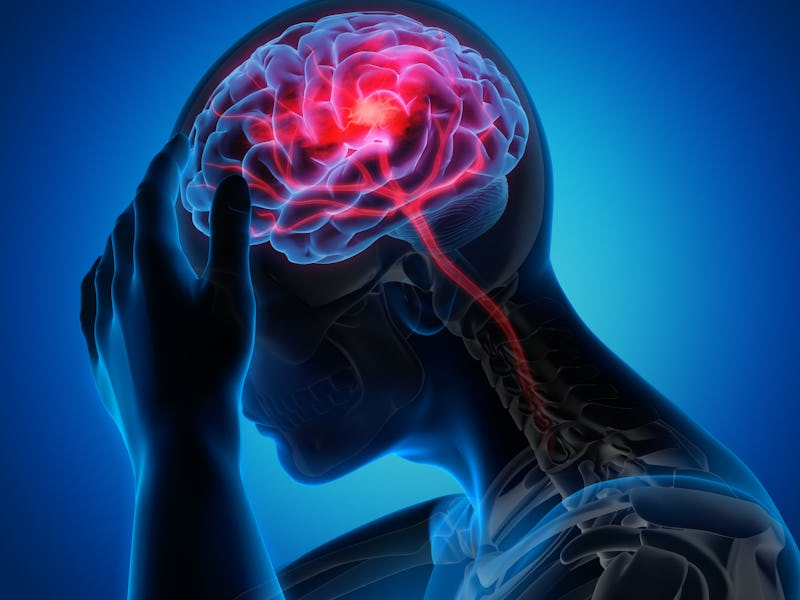
The structural and functional changes described above do not occur in isolation. The long-term neurological impact of chronic stress is strongly associated with several mental health conditions, including depression, anxiety disorders, and burnout.
A 2023 review published in Molecular Psychiatry examining the neurocognitive effects of stress noted that overwhelming, inescapable, and unpredictable stress can measurably impair hippocampal learning and memory — and that these alterations are generally mediated by sustained elevation of cortisol via the HPA axis.
Mental health effects associated with prolonged stress exposure may include:
- Depression and low mood
- Anxiety and heightened emotional reactivity
- Occupational burnout
- Sleep disturbances and difficulty with recovery
- Reduced resilience to new stressors
When the stress response remains chronically activated without adequate periods of recovery, the brain may struggle to return to a calm baseline — a pattern that can create a self-reinforcing cycle of dysregulation.
Physical Effects Beyond the Brain
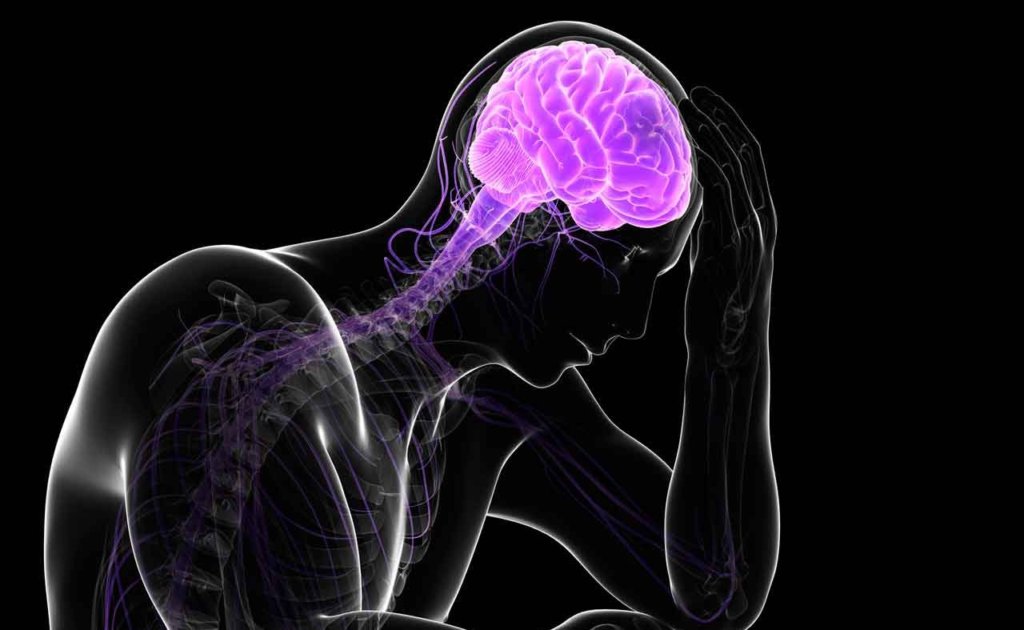
Chronic stress does not only affect mental health. The brain communicates with the rest of the body through the nervous system and hormonal pathways, and sustained activation of the stress response has broader systemic effects.
Research links chronic stress to increased risk for a range of physical health conditions, including cardiovascular disease, immune dysfunction, metabolic changes, and chronic systemic inflammation. This is one reason why addressing chronic stress is not simply a matter of emotional wellbeing — it is a significant concern for whole-body health.
Can the Brain Recover From Chronic Stress?
The encouraging news is that the brain has a remarkable capacity to adapt and repair itself — a property known as neuroplasticity. Research supports the view that many stress-related structural changes are, to a meaningful degree, reversible with the right interventions and consistent recovery practices.
A 2024 systematic review examining the neurobiological effects of mindfulness and meditation found that regular practice is associated with increased cortical thickness in the prefrontal cortex, reduced amygdala reactivity, and improved brain connectivity — changes that support emotional regulation and stress resilience.
Physical exercise has been linked to increased production of brain-derived neurotrophic factor (BDNF), which supports neuron growth and synaptic plasticity, and improved hippocampal health and cognitive performance.
Strategies that support brain recovery from chronic stress include:
- Consistent, restorative sleep — which supports memory consolidation, cortisol regulation, and hippocampal function
- Regular physical movement — particularly aerobic exercise, which promotes neuroplasticity and BDNF production
- Mindfulness and relaxation practices — shown to reduce amygdala reactivity and strengthen prefrontal regulatory capacity
- Adequate nutrition and social connection — both of which support neuroendocrine balance and stress buffering
- Psychological support — including evidence-based therapies such as cognitive-behavioural therapy (CBT), which has been associated with increased prefrontal activity and reduced amygdala hyperactivity
- Specialist assessment — where stress has become persistent or is associated with significant changes in mood, cognition, or functioning, a consultation with a qualified health professional can help identify whether additional evidence-based support is appropriate
Supporting Long-Term Brain Health

Managing stress is not about eliminating pressure entirely — some degree of stress is a normal and even useful part of life. It is about building resilience and giving the brain regular, meaningful opportunities to recover.
Early support can make a significant difference. When people address the effects of chronic stress before they become entrenched, they are better placed to protect both their mental wellbeing and long-term cognitive health.
Understanding how chronic stress affects the brain is the first step toward protecting it.
References
All references are peer-reviewed publications or systematic reviews. In-text citations are numbered in order of appearance.
[1] Kim, J. J., & Diamond, D. M. (2002). The stressed hippocampus, synaptic plasticity and lost memories. Nature Reviews Neuroscience, 3(6), 453–462. https://doi.org/10.1038/nrn849
[2] Kim, E. J., & Kim, J. J. (2023). Neurocognitive effects of stress: A metaparadigm perspective. Molecular Psychiatry, 28(7), 2750–2763. https://doi.org/10.1038/s41380-023-01986-4
[3] Cardoner, N., Andero, R., Cano, M., Marin-Blasco, I., Porta-Casteràs, D., Serra-Blasco, M., Via, E., Vicent-Gil, M., & Portella, M. J. (2024). Impact of stress on brain morphology: Insights into structural biomarkers of stress-related disorders. Current Neuropharmacology, 22(5), 416–437. https://doi.org/10.2174/1570159X21666230703091435
(PMC10845094)
[4] Jannah, M. M. H., & Ismail, M. A. (2025). Analyzing the impact of chronic stress on hippocampal function: A systematic review. Revista Iberoamericana de Psicología del Ejercicio y el Deporte, 20(4), 401–404. https://doi.org/10.52845/RIPED.2025.114176
[5] Moica, T., Gilgor, A., & Moica, S. (2016). The relationship between cortisol and the hippocampal volume in depressed patients: A MRI pilot study. Procedia Technology, 22, 1106–1112. https://doi.org/10.1016/j.protcy.2016.01.155
[6] Arnsten, A. F. T. (2009). Stress signalling pathways that impair prefrontal cortex structure and function. Nature Reviews Neuroscience, 10(6), 410–422. https://doi.org/10.1038/nrn2648
(PMC2907136)
[7] Woo, E., Sansing, L. H., Arnsten, A. F. T., & Datta, D. (2021). Chronic stress weakens connectivity in the prefrontal cortex: Architectural and molecular changes. Chronic Stress, 5, Article 24705470211029254. https://doi.org/10.1177/24705470211029254
(PMC8408896)
[8] Dias-Ferreira, E., Sousa, J. C., Melo, I., Morgado, P., Mesquita, A. R., Cerqueira, J. J., Costa, R. M., & Sousa, N. (2009). Chronic stress causes frontostriatal reorganization and affects decision-making. Science, 325(5940), 621–625. https://doi.org/10.1126/science.1171203
[9] Sarmiento, L. F., da Cunha, P. L., Tabares, S., Tafet, G. E., & Gouveia, A., Jr. (2024). Decision-making under stress: A psychological and neurobiological integrative model. Brain, Behavior, and Immunity – Health, 38, Article 100766. https://doi.org/10.1016/j.bbih.2024.100766
[10] Kaur, A. (2025). The biological and neurological changes in the adult brain due to chronic anxiety, stress, and depression. South Eastern European Journal of Public Health, 4542–4545. https://doi.org/10.70135/seejph.vi.6323
[11] Calderone, A., Latella, D., Impellizzeri, F., de Pasquale, P., Famà, F., Quartarone, A., & Calabrò, R. S. (2024). Neurobiological Changes Induced by Mindfulness and Meditation: A Systematic Review. Biomedicines, 12(11), 2613. https://doi.org/10.3390/biomedicines12112613
If you are interested in learning more about brain health and evidence-based approaches to stress management, our team offers confidential assessments and education programs. You can contact us to find out what may be appropriate for your situation.
Frequently Asked Questions
Yes. Substances can disrupt the brain’s natural mood and stress regulation systems, which may lead to or worsen symptoms of depression and anxiety.
No. Effects vary considerably between individuals. However, people with pre-existing mental health vulnerabilities or family history of mental illness are at higher risk of experiencing negative mental health effects.
Treatment typically involves a combination of psychological therapy, medical support, and sometimes medication. The most effective approach addresses both conditions simultaneously through integrated care.
Yes. Health professionals can provide assessment, support for stabilisation, and coordinated care for both mental health and substance use. You don’t need to stop using substances before seeking help.
Consult a GP or trusted health professional who can assess your symptoms and refer you to specialist services as appropriate. This is the first step towards getting the support you need.
Not necessarily. Treatment plans are individualised. Some people benefit from residential rehabilitation programs, while others manage recovery successfully with outpatient support. Your healthcare team will discuss options suited to your situation.