
How Breathing Techniques Can Help Calm the Nervous System
If you’ve been researching brain stimulation treatments for depression, you’ve probably run into a wall of overlapping terms — TMS, accelerated rTMS, dTMS, cranial stimulation, qEEG, magnetic wave therapy — that all sound the same. They’re not quite. It’s important to understand the difference before you have a discussion with your clinician or healthcare provider.
The Difference between rTMS, dTMS, CES, tDCS
TMS is the umbrella term for the whole family of magnetic brain stimulation techniques. rTMS is the standard, most established form. dTMS uses a different coil design that reaches a bit deeper — it’s also TGA-approved for depression in Australia. CES and tDCS are a genuinely different technology altogether — they use a weak electrical current rather than magnetic pulses. None of these is simply “the best one.” They’re different tools, and which one is appropriate depends on an individual’s clinical assessment. This individual clinical assessment is conducted at clinics like Brain Aid Clinics by a trained and licensed psychiatrist (a medical doctor who is specialised in psychiatry, because rTMS is recognised in Australia for use under Medicare only for Depression).
| Technology | Depth of effect | Australian regulatory status | |
|---|---|---|---|
|
rTMS |
Magnetic (figure-8 coil) |
Surface cortex (~1–1.5cm) |
TGA-approved — treatment-resistant depression |
|
dTMS |
Magnetic (H-coil)
|
Deeper, broader (~3–6cm)
|
TGA-approved for depression (specific device platforms)
|
|
CES |
Weak electrical current
|
Cranial nerve pathways
|
Variable; more limited evidence
|
|
tDCS |
Weak electrical current
|
Superficial, modulatory
|
Investigational in most Australian clinics
|
This table compares mechanism and regulatory status only — it isn't intended as a ranking of effectiveness.
TMS
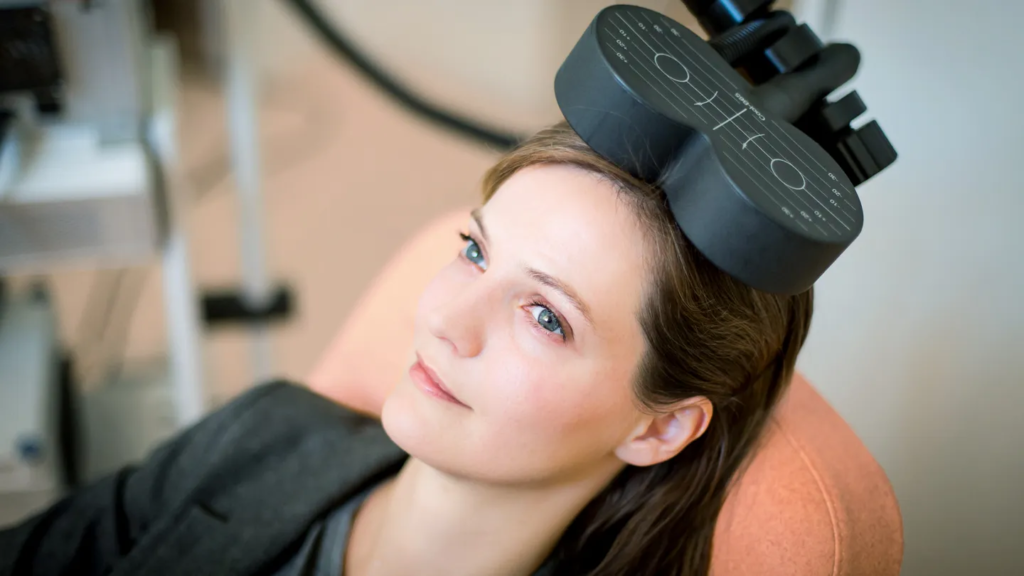
TMS stands for Transcranial Magnetic Stimulation wherein a coil is placed gently against your scalp, and it generates a changing magnetic field — about the same strength as an MRI machine. That field passes painlessly through your skull and creates small electrical currents in the brain tissue underneath, in a very specific, targeted area.
There are two broad forms. Single-pulse TMS is used diagnostically — for example, to map motor pathways — and as treatment for certain conditions. Repetitive TMS (rTMS), continuous TMS (cTMS) and neuronavigated TMS (nTMS) are the therapeutic form, delivered as a structured course of treatment, and it’s what most people actually mean when they say “TMS treatment.”
rTMS: The Standard, Most Established Form
rTMS is the form of TMS with the longest track record and the strongest evidence base. It typically targets the dorsolateral prefrontal cortex — an area of the brain commonly found to be underactive in depression.
A few things worth knowing about how it works in practice:
- Higher-frequency stimulation (around 10Hz or more) generally increases activity in the targeted area; lower-frequency stimulation (around 1Hz or less) generally decreases it — the choice depends on the clinical goal.
- A standard course usually involves 30–36 sessions, roughly 20–40 minutes each, delivered on weekdays over about six to seven weeks.
- Accelerated protocols using intermittent theta burst stimulation (iTBS) compress this into shorter, more frequent sessions over a reduced overall timeframe.
- It’s delivered using a figure-8 shaped coil, which produces a fairly focused magnetic field reaching around 1–1.5cm into the brain.
At Brain Aid Clinics, rTMS is delivered with MRI-guided neuronavigation — meaning your individual brain anatomy is mapped before treatment starts, and the coil’s position is checked against that map throughout every session, rather than positioned by external landmarks alone.
dTMS: A Different Coil, Reaching a Little Deeper
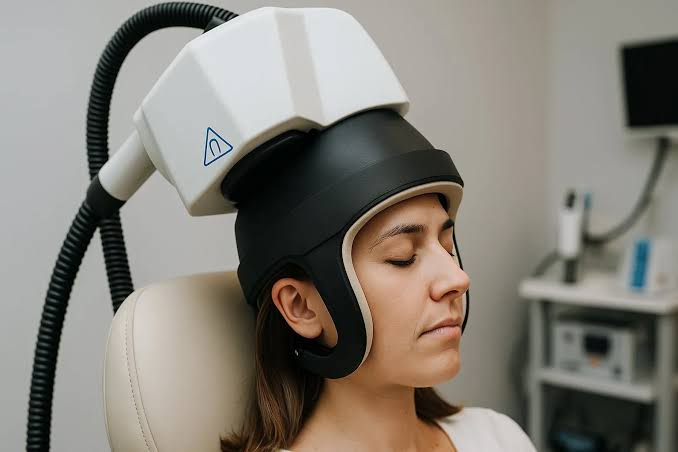
Deep TMS, or dTMS, is a variation that uses a different coil — often called an H-coil, shaped a bit like a helmet rather than a figure-8.
Because of its shape, it produces a broader magnetic field that can reach further into the brain — roughly 3–6cm — extending into some of the deeper structures involved in mood regulation, beyond the surface layer that standard rTMS reaches.
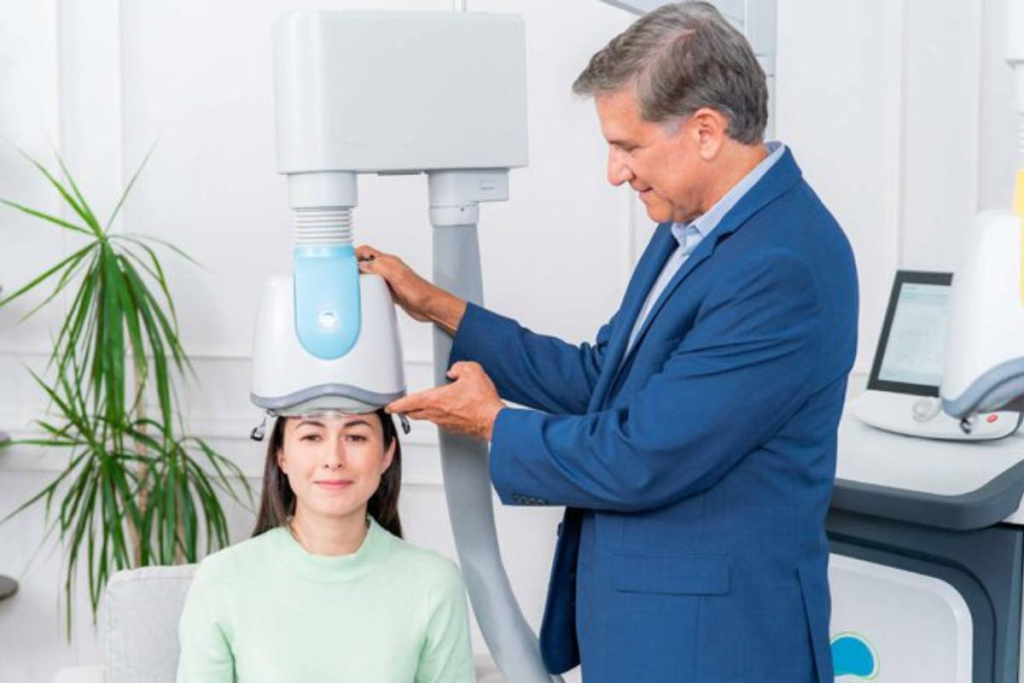
dTMS is TGA-approved for the treatment of depression in Australia, delivered through specific commercial device platforms. It’s also received approval overseas for some additional uses — but it’s worth being clear that overseas approval (for example, from the US FDA) doesn’t automatically translate to Australian approval or availability. If you come across a claim about dTMS being used for something beyond depression, it’s worth checking what regulatory status that specific use actually has here.
A question we’re asked often: is dTMS simply better than standard rTMS, because it reaches deeper? Not necessarily — they’re different tools, not a hierarchy. Reaching deeper isn’t automatically an advantage; it depends on what’s actually being targeted and why. Which approach is appropriate is a clinical decision, made individually, not a matter of one technology being universally superior.
For transparency: Brain Aid Clinics delivers neuronavigated standard rTMS, not dTMS. If you’re specifically looking for H-coil dTMS, it’s worth asking any provider directly which coil type they use — the terminology isn’t always used precisely in marketing materials, and it’s a completely reasonable thing to clarify before you commit to anything.
CES and tDCS
This is where a lot of the online confusion tends to come from, because “cranial stimulation” sounds like it might be another form of TMS. It isn’t — it’s a different technology altogether, based on electrical current rather than magnetic fields.
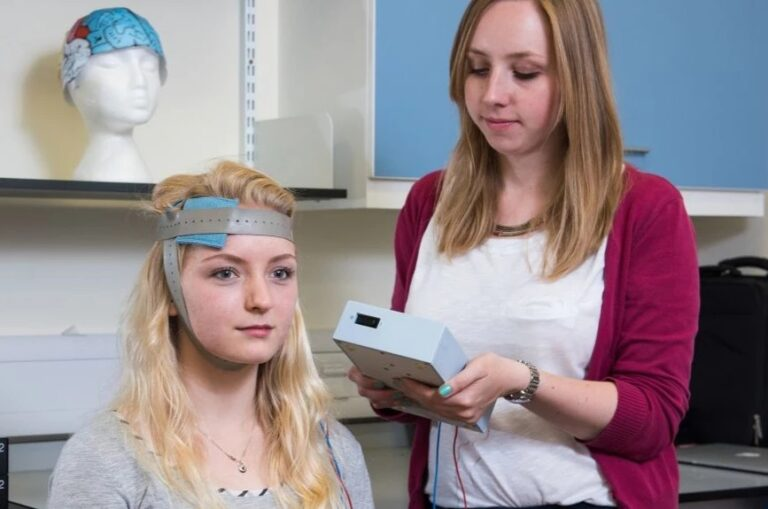
Cranial Electrotherapy Stimulation (CES) uses a very low-intensity electrical current, usually delivered through ear-clip or scalp electrodes. It’s understood to work mainly by stimulating cranial nerves, rather than directly triggering activity in cortical neurons the way TMS does.
Transcranial Direct Current Stimulation (tDCS) applies a weak, steady electrical current — typically just 1–2 milliamps — through electrodes on the scalp. Rather than directly causing neurons to fire, it gently shifts how easily they fire, making the underlying area slightly more or less excitable depending on the current’s direction.
The mechanistic difference from TMS is genuinely significant: TMS uses a strong, focused magnetic field to directly trigger neuron activity. CES and tDCS use much gentler currents that modulate activity more subtly — and because the skull naturally resists electrical current more than it resists a magnetic field, these methods tend to be less precise and less focal at any depth.
At Brain Aid Clinics, tDCS is available as an investigational option, considered and discussed individually at assessment, and always delivered under psychiatrist oversight — not offered as a general consumer or home-use product.
If You've Searched "Magnetic Wave Therapy" or "Electromagnetic Stimulation"
You were most likely looking for information about TMS. These particular phrases aren’t standardised medical terms — they tend to come from imprecise or informal language, sometimes reinforced by marketing copy that isn’t always careful about the distinction.
If you’re speaking with any provider about brain stimulation treatment, a few questions tend to cut through the confusion quickly:
- Is this magnetic (TMS, rTMS, or dTMS) or electrical (CES or tDCS)?
- If it’s magnetic, is it delivered with a standard figure-8 coil, or an H-coil?
- Is this specific use TGA-approved for my condition, or is it considered off-label or investigational?
- Is treatment mapped to my individual brain anatomy, or positioned using standard external landmarks?
You’re entitled to ask these questions of anyone offering you treatment, and a good provider should be happy to answer them clearly.

Melbourne Clinic
8 Fullarton Dr, Epping VIC 3076, Australia
Gold Coast Clinic
level 2/151 Smith St, Southport QLD 4215, Australia
Ready to take the first step?
Brain Aid Clinics offers whole-person mental health assessment, considering the connection between your physical and emotional wellbeing.
Individual assessment. Personalised care. A whole-person approach.
Where This Leaves You
At Brain Aid Clinics, we deliver rTMS using MRI-guided neuronavigation. It’s TGA-approved for treatment-resistant depression, with Medicare rebates available under MBS 14216 and MBS 14217. For other conditions — including anxiety, PTSD, and chronic pain — treatment would be considered individually and delivered off-label, under psychiatrist oversight and with full informed consent. tDCS is also available as an investigational option in appropriate circumstances.
If you’re still not sure which of these technologies might be relevant to your situation, that uncertainty is completely normal — and it’s exactly what a proper clinical assessment is there to help with.
This article is for general information only and is not medical advice. TMS/rTMS is TGA-approved for treatment-resistant depression; other technologies and applications discussed may be off-label, investigational, or approved only in other jurisdictions (such as the United States under FDA clearance) — this is not equivalent to Australian TGA approval. Please consult a qualified health professional regarding your individual circumstances. Brain Aid Clinics — AHPRA-compliant. ABN 76 664 676 420.