
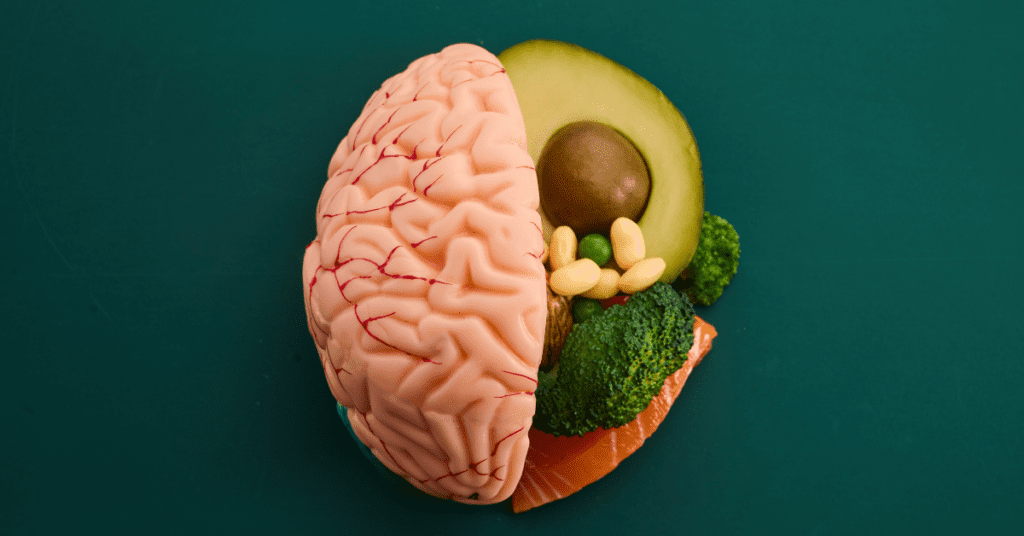
You’ve probably felt it before: the knot in your stomach before a big meeting, the loss of appetite when you’re anxious, the way a good meal can lift your mood. That’s not a coincidence — it’s your gut and brain talking to each other.
This two-way conversation is often called the gut-brain connection, and researchers are increasingly interested in what it might mean for how we think, feel, and manage stress.
What Is the Gut-Brain Connection?

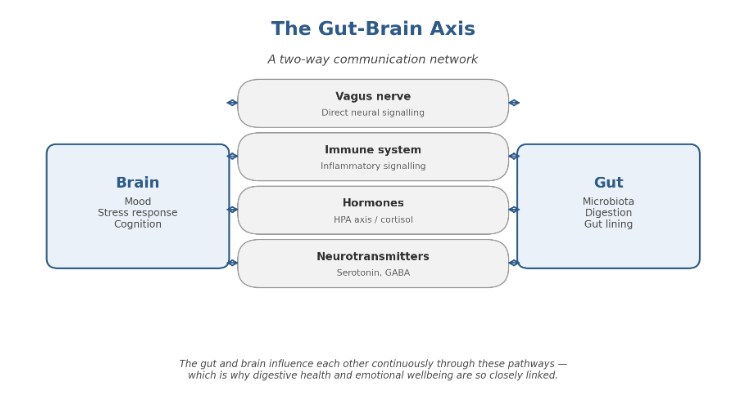
Your gut and brain are in constant communication through what scientists call the gut-brain axis — a network involving the vagus nerve, hormones, the immune system, and trillions of microorganisms living in your digestive tract.
Around 90% of the body’s serotonin, a chemical linked to mood regulation, is produced in the gut. Researchers are still working to understand exactly what this means for mental health, but it’s one reason the gut is sometimes referred to as the body’s “second brain.”
What the Research Says
According to a peer-reviewed review of the gut-brain axis published in 2024, changes in gut bacteria (known as dysbiosis) have been associated with mood-related presentations including anxiety and low mood, though scientists caution that the relationship is complex and still being studied.
- The gut and brain communicate through the vagus nerve, hormones, and immune signalling
- Gut bacteria are involved in producing neurotransmitters such as serotonin and GABA
- Imbalances in gut bacteria have been observed alongside certain mood-related presentations
- Diet, sleep, stress, and exercise all appear to influence both gut and mental health
It’s an evolving field, and more research is needed before firm conclusions can be drawn — but the emerging picture is one where gut health and emotional wellbeing are closely intertwined.
Everyday Habits That Support Both Gut and Mood

You don’t need a dramatic overhaul to start supporting this connection. Small, consistent habits tend to make the biggest difference:
- Eating a varied diet rich in fibre, vegetables, and fermented foods
- Prioritising regular sleep, which affects both gut bacteria and emotional regulation
- Managing stress through movement, breathing exercises, or time outdoors
- Staying attentive to how certain foods make you feel, physically and emotionally
- Limiting excess alcohol, which can disrupt the balance of gut bacteria
These habits support general wellbeing — they aren’t a substitute for professional support if you’re experiencing persistent low mood, anxiety, or digestive symptoms.
When It Might Be Worth Talking to Someone
Occasional stomach upset or a low day here and there is normal. But some patterns are worth checking in about with a health professional:
- Persistent digestive symptoms alongside low mood, anxiety, or fatigue
- Changes in appetite or digestion that coincide with periods of stress
- A general sense that gut symptoms and mood are affecting each other
- Ongoing symptoms that haven’t improved with everyday lifestyle changes
These experiences are common, and they’re worth taking seriously. If any of this feels familiar, that’s reason enough to reach out.
A Whole-Person Approach

At Brain Aid Clinics, we understand that mental and physical wellbeing are deeply connected. We take a whole-person approach to assessment, considering lifestyle, physical health, and emotional wellbeing together — rather than looking at symptoms in isolation.
Where relevant, this may include discussing gut and lifestyle factors as part of a broader mental health assessment. Any specific recommendations are worked through individually with you, as part of your consultation.
Your Gut and Your Mind Deserve the Same Care
Emotional wellbeing isn’t shaped by your thoughts alone — it’s shaped by your whole body, including your gut. Paying attention to that connection is a simple, evidence-informed way to support how you feel.
So here’s a gentle nudge: how have you been treating your gut lately — and how have you been feeling?
If something in this article resonated, it may be worth speaking with your GP or reaching out to a mental health specialist for a broader picture of your wellbeing.

Melbourne Clinic
8 Fullarton Dr, Epping VIC 3076, Australia
Gold Coast Clinic
level 2/151 Smith St, Southport QLD 4215, Australia
Ready to take the first step?
Brain Aid Clinics offers whole-person mental health assessment, considering the connection between your physical and emotional wellbeing.
Individual assessment. Personalised care. A whole-person approach.
References
Clapp, M., Aurora, N., Herrera, L., Bhatia, M., Wilen, E., & Wakefield, S. (2017). Gut microbiota’s effect on mental health: The gut-brain axis. Clinics and Practice, 7(4), Article 987. https://doi.org/10.4081/cp.2017.987
Mehta, I., Juneja, K., Nimmakayala, T., Bansal, L., Pulekar, S., Duggineni, D., Ghori, H. K., Modi, N., & Younas, S. (2025). Gut microbiota and mental health: A comprehensive review of gut-brain interactions in mood disorders. Cureus, 17(3), Article e81447. https://doi.org/10.7759/cureus.81447
Rosas-Sánchez, G. U., Germán-Ponciano, L. J., Puga-Olguín, A., Flores Soto, M. E., Nápoles Medina, A. Y., Muñoz-Carillo, J. L., Rodríguez-Landa, J. F., & Soria-Fregozo, C. (2025). Gut–brain axis in mood disorders: A narrative review of neurobiological insights and probiotic interventions. Biomedicines, 13(8), Article 1831. https://doi.org/10.3390/biomedicines13081831
Yano, J. M., Yu, K., Donaldson, G. P., Shastri, G. G., Ann, P., Ma, L., Nagler, C. R., Ismagilov, R. F., Mazmanian, S. K., & Hsiao, E. Y. (2015). Indigenous bacteria from the gut microbiota regulate host serotonin biosynthesis. Cell, 161(2), 264–276. https://doi.org/10.1016/j.cell.2015.02.047
EDITORIAL NOTES — DO NOT PUBLISH
CTA intent maintained throughout. The post retains:
- Warm, direct tone consistent with BAC brand voice
- The ‘knot in your stomach’ relatable opening (effective, non-clinical, no outcome claim)
- ‘Second brain’ framing (accurate, widely used, non-promotional)
- Everyday habits section — practical, no supplement or protocol names
- ‘When it might be worth talking to someone’ checklist — describes experiences, not conditions
- Whole-person positioning — preserved in compliant language
- A genuine CTA directing readers to assessment, not treatment
What was removed: outcome guarantees, product/protocol names, condition-targeting claims, unattributed statistics, and specific timeframes (‘4 weeks’, ‘within days’). These are not salvageable under AHPRA rules — they must be absent from consumer-facing advertising regardless of how they are framed.
Target keywords ‘gut brain connection’ and ‘gut health mood’ are woven into the H1, intro, and subheadings naturally, without triggering outcome-claim language.
END — FOR REVIEW BEFORE PUBLICATION