
How Breathing Techniques Can Help Calm the Nervous System
When I was going through medical school, the accepted wisdom was that the brain took a while to finish growing up — and then stopped. Set, like concrete. You can’t teach an old dog new tricks.
Which would be fairly discouraging news, if it were true. It isn’t.
Your brain changes. Not just in childhood, but across your whole life. Every time you learn something, practise something, or recover from something, the physical structure of your brain shifts a little in response. .
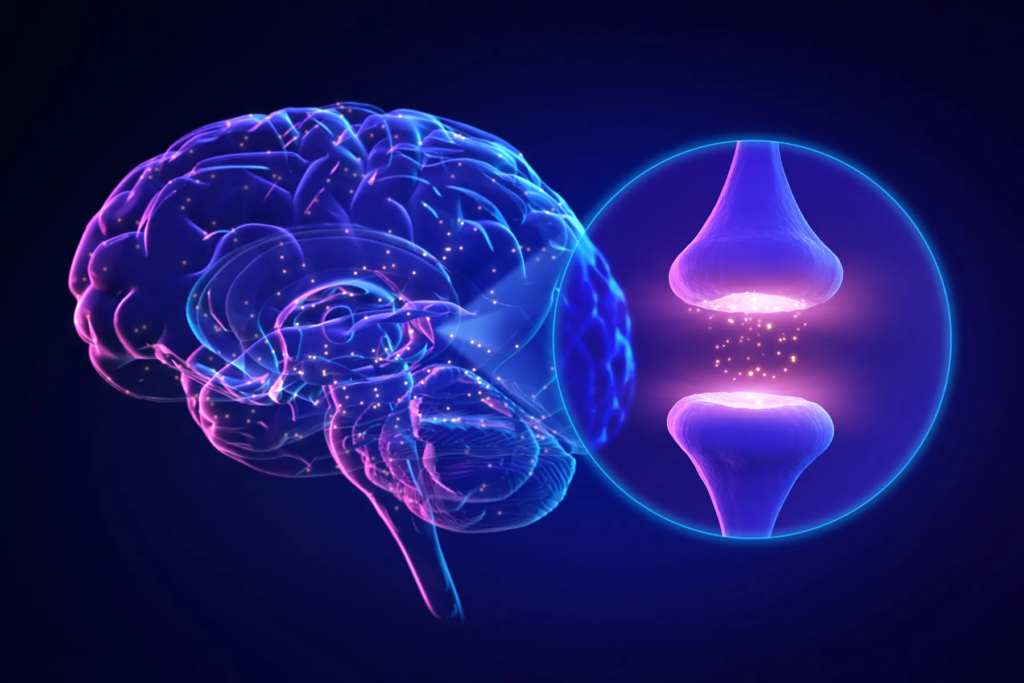
The term for this is neuroplasticity. It sounds technical, but it describes something reasonably simple: the brain reorganises itself according to what you do with it.
This article covers what that actually means, what the evidence supports, and — just as importantly — what neuroplasticity does not mean. That last part gets left out far more often than it should.
What the recent evidence shows
In March 2026, a paper in the scientific journal Nature strengthened what we understand about adult neurogenesis: the formation of new brain cells in adulthood.
Working with donated brain tissue, the researchers found neural stem cells, neuroblasts and immature granule neurons — the early stages of new neurons — in young adults, in cognitively intact older adults, and in SuperAgers, people who hold onto exceptional memory into late life. They also examined tissue from people with Alzheimer’s disease, and there they found the process disrupted.
It’s careful work, and it sits alongside findings from several independent teams pointing in the same direction. So we can now say with reasonable confidence that new neurons continue to form in the adult hippocampus, a region central to memory.
What we cannot yet say is how many, or what difference they make to any one person’s memory or mood. That question is genuinely still open, and anyone telling you otherwise is ahead of the evidence.
The broader picture, though, is not in doubt.
Two ways the brain changes
In medicine we tend to split things into structural — the shape and the components — and functional — the output and the jobs. Neuroplasticity works both ways.
Structural change
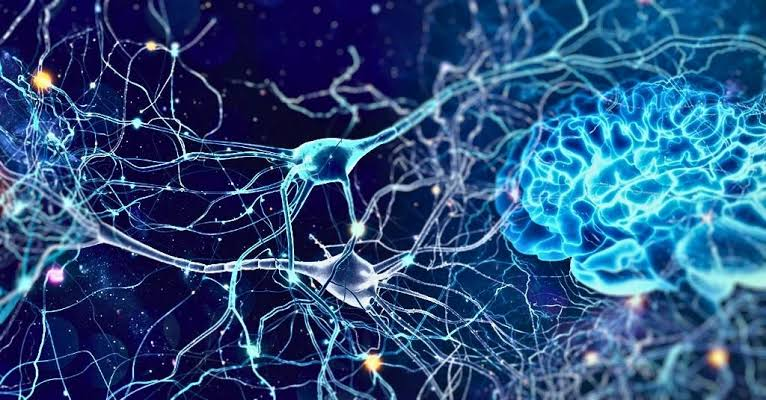
Brain cells physically change shape. When you use a connection repeatedly, it strengthens: the connections grow denser and the signal travels more easily. Researchers call this long-term potentiation, usually summarised as ce ls that fire together, wire together — what’s known as Hebbian learning.
The reverse also happens. Connections that go unused weaken and are eventually cleared away, a process called synaptic pruning.
That second half matters as much as the first. A brain that kept every connection it ever made would be slow and noisy. Pruning is not a malfunction — it’s how the brain stays efficient.
Your brain is constantly deciding what to keep by observing what you use.
Functional change
If a region of the brain is damaged or goes unused, other regions can sometimes take on its work.
One of the clearest demonstrations comes from research in people who are blind. Areas that would ordinarily process vision are recruited to help handle touch — including reading Braille — and sound. Nothing has been rewired at random. The job has been rehoused, because the demand changed.
Neuroplasticity across a lifetime
The brain doesn’t change the same way at every age.
Infancy and early childhood. The brain overproduces connections at an extraordinary rate, then retains the ones that get used. This is why early experience carries so much weight, and why young children acquire language in a way the rest of us find almost impossible to replicate.
Adolescence. Pruning becomes the dominant process. Inefficient connections are eliminated while heavily used circuits are insulated with a fatty sheath called myelin, which speeds up signal transmission. The frontal regions — planning, judgement, impulse control — are still being restructured well into a person’s twenties.
Adulthood. Change becomes more targeted, following what a person actually does: skills, work, habits, repeated experience. This is also where adult neurogenesis sits, and it was disputed for decades — two influential papers in 2018 reached opposite conclusions and the field stayed unsettled for years afterwards. Newer sequencing techniques have moved the balance of evidence considerably.
Older age. The pattern shifts toward compensation. Older brains frequently recruit additional regions to perform the same task, drawing on both hemispheres where a younger brain used one. This appears to be part of why function often holds up better than a scan alone would predict.
What actually drives change
If the brain reorganises around use, the practical question is what kind of use matters. The honest answer is sustained, effortful use. Three areas have reasonable evidence behind them.
Aerobic exercise
Movement that raises your heart rate is consistently associated with better brain health outcomes. The mechanism is still being worked out. One well-studied candidate is a protein called brain-derived neurotrophic factor (BDNF), which supports the survival and growth of brain cells and rises with aerobic activity.
I’d rather be precise here than sell you a molecule. The association between exercise and brain health is solid. The BDNF pathway is a plausible and actively researched explanation for part of it. It is not a settled mechanism, and it is not a lever you can pull directly.

Genuine novelty
Learning something new builds new pathways. Learning something you’re already good at mostly runs an existing one. This is the distinction that matters, and it’s why commercial brain-training products have had such underwhelming results in controlled trials — people get better at the game rather than at anything else. Complex, genuinely unfamiliar skills are the ones that appear to demand structural change: a new language, a musical instrument, a motor skill your hands don’t yet know. Difficulty is the active ingredient. If it feels comfortable, it probably isn’t building much.
Targeted repetition after injury
Stroke rehabilitation is the clearest applied demonstration of neuroplasticity we have. Therapies built on intensive, repetitive, task-specific practice can encourage undamaged brain tissue to take on functions that have been lost. It is slow, demanding work, and it doesn’t restore everything. But it is direct evidence that a damaged adult brain can meaningfully reorganise, given the right kind of sustained demand.
What neuroplasticity does not mean
Here’s the part that usually gets skipped, and I think it matters more than everything above it.
It does not mean you can think your way out of an illness. Neuroplasticity describes a property of biological tissue. It is not a statement about willpower, and it does not imply that a person who hasn’t recovered simply wanted it less.
It has limits, and they vary. Capacity for change differs between people, between brain regions, and across ages. Some changes are readily reversible; some are not. “The brain can change” is not the same claim as “any brain can change in any direction, given enough effort.”
It is not automatically beneficial. Plasticity is directional but not moral. Chronic pain, prolonged stress and persistent low mood carve their own pathways with exactly the same efficiency as anything you’d choose. Some of the hardest problems seen clinically are problems of plasticity working faithfully in an unhelpful direction.
If you’ve been unwell and this idea has been used — even kindly — to suggest your recovery is a matter of trying harder, that’s a misuse of the science. The changeability of the brain is a description of biology. It isn’t a verdict on your effort.
That’s the honest version. And it’s still, on balance, good news. A brain that responds to what you do with it is a brain that has options.

Melbourne Clinic
8 Fullarton Dr, Epping VIC 3076, Australia
Gold Coast Clinic
level 2/151 Smith St, Southport QLD 4215, Australia
If You Need Support Right Now
If you are in immediate danger, call 000.
If you are struggling and need to talk to someone today:
Lifeline — 13 11 14 (24 hours)
13YARN — 13 92 76 (24 hours, for Aboriginal and Torres Strait Islander people)
Beyond Blue — 1300 22 4636 (24 hours)
References
- Disouky, A., Sanborn, M. A., Sabitha, K. R., Mostafa, M. M., Ayala, I. A., Bennett, D. A., Lu, Y., Zhou, Y., Keene, C. D., Weintraub, S., Gefen, T., Mesulam, M. M., Geula, C., Maienschein-Cline, M., Rehman, J., & Lazarov, O. (2026). Human hippocampal neurogenesis in adulthood, ageing and Alzheimer’s disease. Nature, 652(8112), 1264–1273. https://doi.org/10.1038/s41586-026-10169-4
- Doludda, B., Barde, W., D’Egidio, F., Fitzsimons, C. P., Frisén, J., Gage, F. H., Jessberger, S., Lazarov, O., Lie, D. C., Lucassen, P. J., de Lucia, C., Salta, E., Song, H., Song, J., Thuret, S., Toda, T., & Kempermann, G. (2026). Adult neurogenesis: New neurons, new opportunities. Cell stem cell, 33(3), 382–392. https://doi.org/10.1016/j.stem.2026.01.014
- Conchillo-Liria, J., Cavero-Redondo, I., Saz-Lara, A., Moreno-Herraiz, N., Calvo-Utrilla, C., González-Collado, A., & Otero-Luis, I. (2026). Constraint-Induced Movement Therapy in the Rehabilitation of Adults After Stroke: An Umbrella Review. Journal of Clinical Medicine, 15(6), 2451. https://doi.org/10.3390/jcm15062451
Internal linking
- “if you’ve been unwell” → link to depression condition page
- Author byline → link to clinician profile page
- Footer → contact page only
Publishing notes
- No treatment claim, no modality reference, no service mention anywhere in the body. The article ends as education. Do not add a closing paragraph connecting this to any treatment offered.
- First-person clinician voice means the byline credential must be exact: “Dr Grace Ng, MBBS (Hons)”. No specialty descriptor, nothing implying specialist registration.
- Author schema: article, with author and reviewedBy naming the medical reviewer, plus a visible last-reviewed date.
- Comments, if enabled: daily moderation per the Content Engine SOP.